
Fish moth control across Gauteng
A silver, wriggling insect in the bath in the morning, irregular holes in the linen cupboard, book bindings nibbled ragged. Fish moths, silverfish to most of the English-speaking world, are harmless to people (they do not bite or carry disease; their dust is at most a minor allergen for some sensitised people) and slow to do damage, which is exactly why a big infestation is an old one. Ecopoise treats the cupboards, the rooms and the hiding places with a written 3 months guarantee.
What a fish moth is
Not a moth at all. Fish moths are wingless insects, one to one and a half centimetres long without the antennae and tails, slender, soft-bodied and covered in silvery or grey scales that glitter and rub off like dust. Two long antennae in front, three long tail filaments behind, and a wriggling, fish-like run away from the light. Their line is older than the first winged insects. The grey silverfish now taking over well-insulated European homes was first described in 1905 from specimens collected at Bothaville, in what is now the Free State; where it originally came from is still unknown.
-
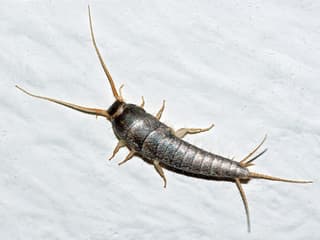 Fish moth (silverfish)Lepisma saccharinumShiny silver, about 1 cm without antennae and tails; two long antennae and three tails about half the body length.
-
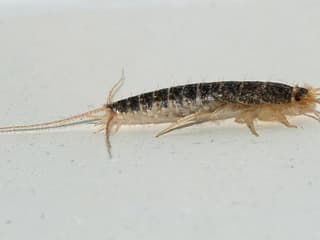 Grey silverfishCtenolepisma longicaudatumLight to dark grey with a glimmer, larger and hairier than the common silverfish, tails about as long as the body; first described from Bothaville in 1905.
-
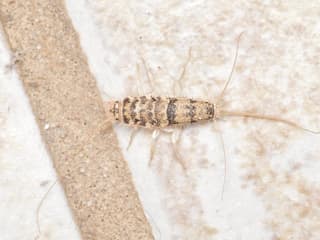 FirebratThermobia domesticaShiny, mottled grey or brown, about the same size; keeps to warm places.
The photos are a guide, not a diagnosis. Species vary, and a technician on site will confirm which one you have.
Where they live
Fish moths want damp rooms at ordinary indoor temperatures; the grey silverfish, the one most often recorded in Gauteng, also copes with drier air. They live in bathrooms, laundries, kitchens, linen and clothing cupboards, bookshelves, boxes of stored papers and roof spaces. They travel along pipes and through the gaps between floors, and they arrive in boxes, books, papers, second-hand furniture and old starched clothing. They fall into baths and basins at night and cannot climb the slippery sides, which is where most people first meet them.
What they eat
Starch, glue and paste: the sizing in paper, wallpaper paste, book bindings, the starch in clothing. Dry foods such as cereal, flour, pasta and pet food. Household dust and dead insects. Their jaws are weak, so they scrape rather than bite, and the damage starts in one spot and spreads as scattered, irregular holes, notched page edges, ragged bindings and yellowish stains on linens. They can go months without food, and close to a year if there is water.
Why they take years to notice
A fish moth lives for years, not weeks, moults all its life, and a female lays her eggs a few at a time, tucked into cracks, cloth or dust: perhaps fifty in a year and around a hundred in her life. Populations grow slowly, so by the time you see them nightly and find holes in the linen, they have been there a long time.
Do they bite or carry disease?
No. They do not bite and they do not transmit disease. They are a nuisance pest and a destroyer of papers, photographs, books and fabric. The one health note: like dust mites, their scales and droppings can be a minor allergen for some sensitised people.
Signs
- Live fish moths in the bath or basin in the morning, or scattering when you open a cupboard.
- Scales and light-brown droppings around or under damaged items.
- Irregular, unconnected holes in paper or fabric; grazed, discoloured pages; yellow stains on linen.
What Ecopoise does
- Registered operators. Registered pest control operators with the Department of Agriculture; certified members of SAPCA and PCFSA.
- A barrier and the hiding places. The technicians spray a perimeter barrier inside and outside the building, with spot treatments in the cupboards and rooms where they find activity. The barrier protects the house for the guarantee period.
- During the visit, anyone elderly, any infant and anyone with asthma must be away from the premises, and stay away for four hours after the treatment is done. Birds and fish go outside before we start.
- Guarantee: 3 months, in writing.
- Price. There are no set prices, because the price depends on the size of the area to be treated. Every job is quoted first.
Questions people ask
Are they eating my clothes?
They go first for the starch in the fabric and the sizing in paper, but they can digest the cellulose in cotton, linen and rayon too, so the scraping leaves irregular holes and yellow stains, especially on linens, and it spreads from one spot.
Is one in the bath a problem?
One in the bath is rarely the only one. Fish moths are nocturnal and hide by day, so the ones you see are a fraction of the ones you have, and populations grow slowly over years. If you are seeing them regularly, the infestation is established.
Can I just send you a photo?
Yes. Send us a clear photo on WhatsApp. Nine times out of ten we can tell you what it is; when we cannot, we send it to an entomologist. WhatsApp it to 078 900 1536.
Sources and photo credits
Sources: University of California IPM Pest Notes 7475 (silverfish and firebrats, 2009); NC State Extension (2017); Ohio State University Extension ENT-64 (2015); Iowa State University Extension (2016); Cornell Cooperative Extension; Schoelitsz and Brooks, International Conference on Urban Pests 2014; Womersley 1937; Wikipedia, "Silverfish", "Zygentoma" and "Ctenolepisma longicaudatum" (read 30 Oct 2026); Ecopoise's own treatment information letter for the treatment. Ecopoise keeps the full fact bank with every reference.
Identification photos, via Wikimedia Commons, cropped and resized: Fish moth (silverfish): Christian Fischer (CC BY-SA 3.0); Grey silverfish: Alvesgaspar (CC BY-SA 3.0); Firebrat: Ryan Hodnett (CC BY-SA 4.0). The licence names link to the full licence text.


Seen the signs? Call or WhatsApp 078 900 1536
All of Gauteng.